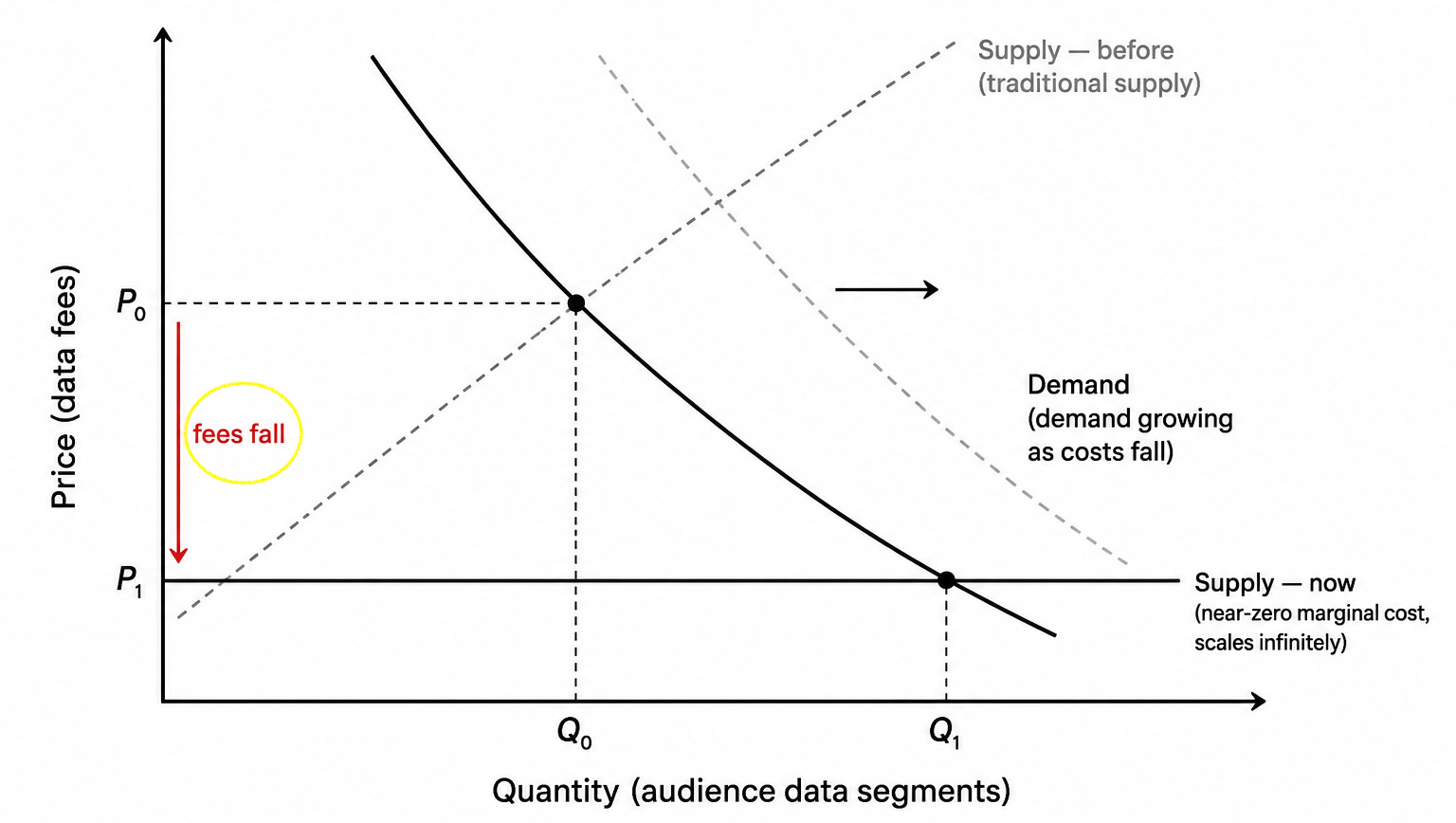

The influencer data you are paying for wants to be free. Free as in cheap to make and massively profitable. The cost of producing another audience segment has fallen to almost nothing.
Why are so many influencer data sets appearing now, with more stealth shops about to launch? The marketing often shares a font, a palette, a layout. That is not a coincidence. Many were built the same way, at 3am with Claude Code and a warm Mountain Dew. I did the same, but we use it for business intelligence and writing columns like this.
When processing costs approach zero, everyone is “precision.” Everyone is “proprietary.” Everyone has “first-party data,” “decision-maker networks,” “trusted messengers,” “policy influencers,” “hard-to-reach audiences,” and “activation-ready segments.” Everyone can reach the people who matter, the people around the people who matter. That is what overbuilt categories sound like before prices drop. The decks get cleaner. The sales materials get prettier. The nouns get more confident. But the budget line underneath stays stubbornly finite, tucked inside sub-sub-sub vendors.
What is new is that influencer segments are now mass-produced into addressable audience products at a cost approaching zero. What once took an expensive analyst weeks now takes a prompt. Supply now is approaching infinite and demand is linear, governed by fundraising and changing media mixes.
This is how you get more influencer data sets than influencers. There are more US mutual funds, about 6,800, than there are listed US companies, about 3,700. The companies underneath do not multiply. Apple sits inside more than 750 funds. Growth, value, ESG, AI, the same holdings sliced and relabeled. Influencer targeting runs the same way. The roster of people who actually move a decision is small and fixed.
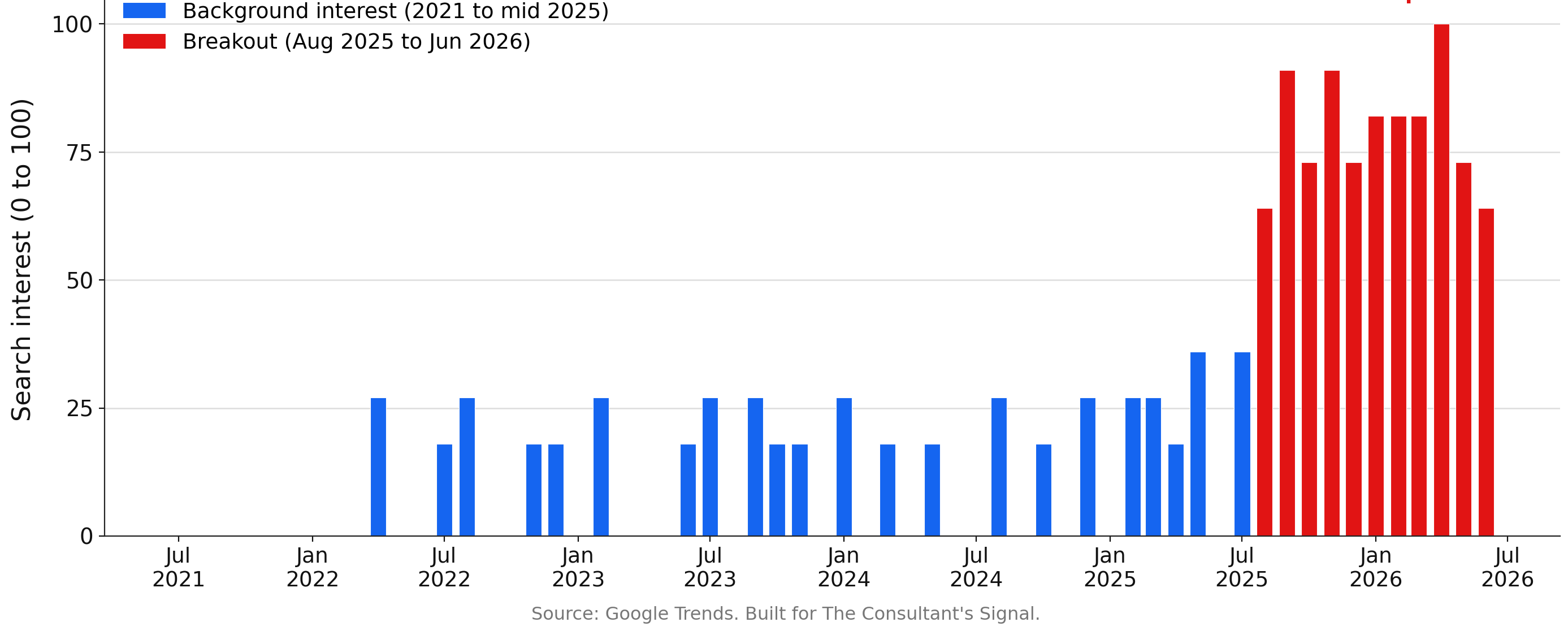
History might not repeat itself but it rhymes. The word overbuild is back in the market conversation, aimed now at AI data centers. It rhymes with 1999, when telecom laid millions of miles of fiber for traffic that arrived years later. The fiber was real. Most of the firms that laid it did not survive to bill for it. By 2004, only about a tenth of it had been lit up. Search interest in the word “overbuilt” is climbing to its highest levels in twenty years.
Most influencer segments will sit dark forever. But that’s okay since it costs nearly nothing to produce. There is a McCormick spice executive quietly nodding, thinking about what to do with the ground marjoram sitting in the warehouse.
This does not take into account voter data from L2, Aristotle, PDI and others. They have a moat that others don’t; collecting and normalizing voter files from each jurisdiction is, frankly, gnarly. The files come in every flavor and quality level. I’ve seen handwritten voter files faxed in, and other missing items like Los Angeles.
None of this means the people building these are not good. Many are very good. An LLM is not smarter than twenty years in the field, it is only more efficient. The judgment stays and the rest becomes a commodity.
AI is collapsing the political labor market at different speeds. Judgment, relationships, and proprietary data will be the last to go. The data-first political media shops with no long-term plan will pivot or shrink. The winners were here first, are the best, or are the cheapest. The first were twenty years ago. Best is a very high bar. Cheapest is the easiest and least profitable lane.
We have our favorites. But the test is simple: differentiated data, low friction onboarding, and outcomes a buyer can understand. Otherwise it is just a new name on a borrowed source with familiar pipes. Keep an eye on data fees over the next 18 months. Reconsider long-duration data deals. The math with be different before the contract expires. We will be buying more data and paying less for it.